-- Create table
CREATE OR REPLACE TABLE Employees (
    EmployeeID INT,
    Name STRING,
    Department STRING,
    Salary NUMBER(10,2),
    JoiningDate DATE,
    Status STRING
);

-- Insert data
INSERT INTO Employees (EmployeeID, Name, Department, Salary, JoiningDate, Status)
VALUES
(1, 'Alice', 'Finance', 75000, '2022-03-15', 'Active'),
(2, 'Bob', 'Engineering', 90000, '2021-07-10', 'Active'),
(3, 'Charlie', 'Marketing', 65000, '2023-01-20', 'Inactive');

-- Update a record
UPDATE Employees
SET Salary = 80000
WHERE EmployeeID = 1;

-- Delete inactive employees
DELETE FROM Employees
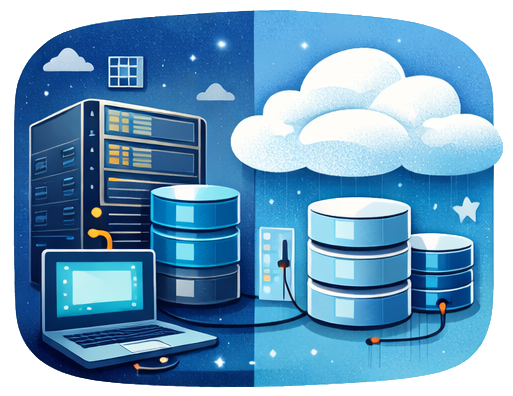
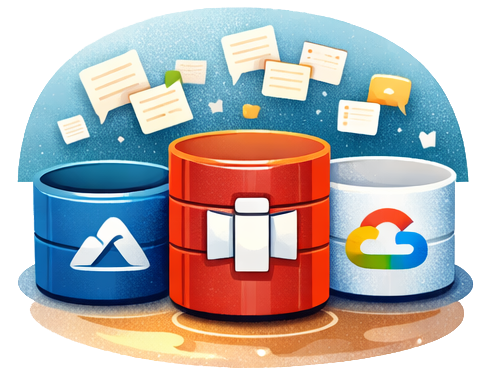
WHERE Status = 'Inactive';Relational and cloud-native databases form the backbone of modern information ecosystems, enabling structured storage, high-performance queries, and reliable transactional operations. SQL Server offers a mature, on-premises platform with rich support for T-SQL, indexing, and security features, ideal for traditional enterprise applications. Its cloud counterpart, Azure SQL Managed Instance, combines the familiarity of SQL Server with fully managed capabilities, including automated backups, scaling, patching, and integration with other Azure services. For organizations focusing on analytics, Snowflake provides a cloud-native data warehouse that separates compute from storage, allows concurrent access, and supports semi-structured formats such as JSON or Parquet, making it highly suitable for large-scale reporting and machine learning workloads.
These platforms complement each other in hybrid and multi-cloud architectures, allowing operational workloads to remain on familiar engines while analytical and AI-driven pipelines leverage scalable, pay-per-use systems. Each system offers programmatic access, robust transaction control, and integration with orchestration pipelines, giving teams flexibility to design reliable and maintainable data workflows.